In the competitive landscape of consumer packaged goods (CPG), improving gross margin is not just a goal; it's a necessity for sustainable growth and profitability. What if I told you that increasing your gross margin by just 10 percentage points could dramatically enhance your business's profitability? In this blog post, we will explore how CFOs can effectively improve gross margin through strategic pricing, cost management, and mix optimization. Let’s dive in!
Understanding Gross Margin
Gross margin is a critical financial metric that indicates the percentage of revenue that exceeds the cost of goods sold (COGS). It is calculated using the formula:
Gross Margin = (Revenue - COGS) / Revenue
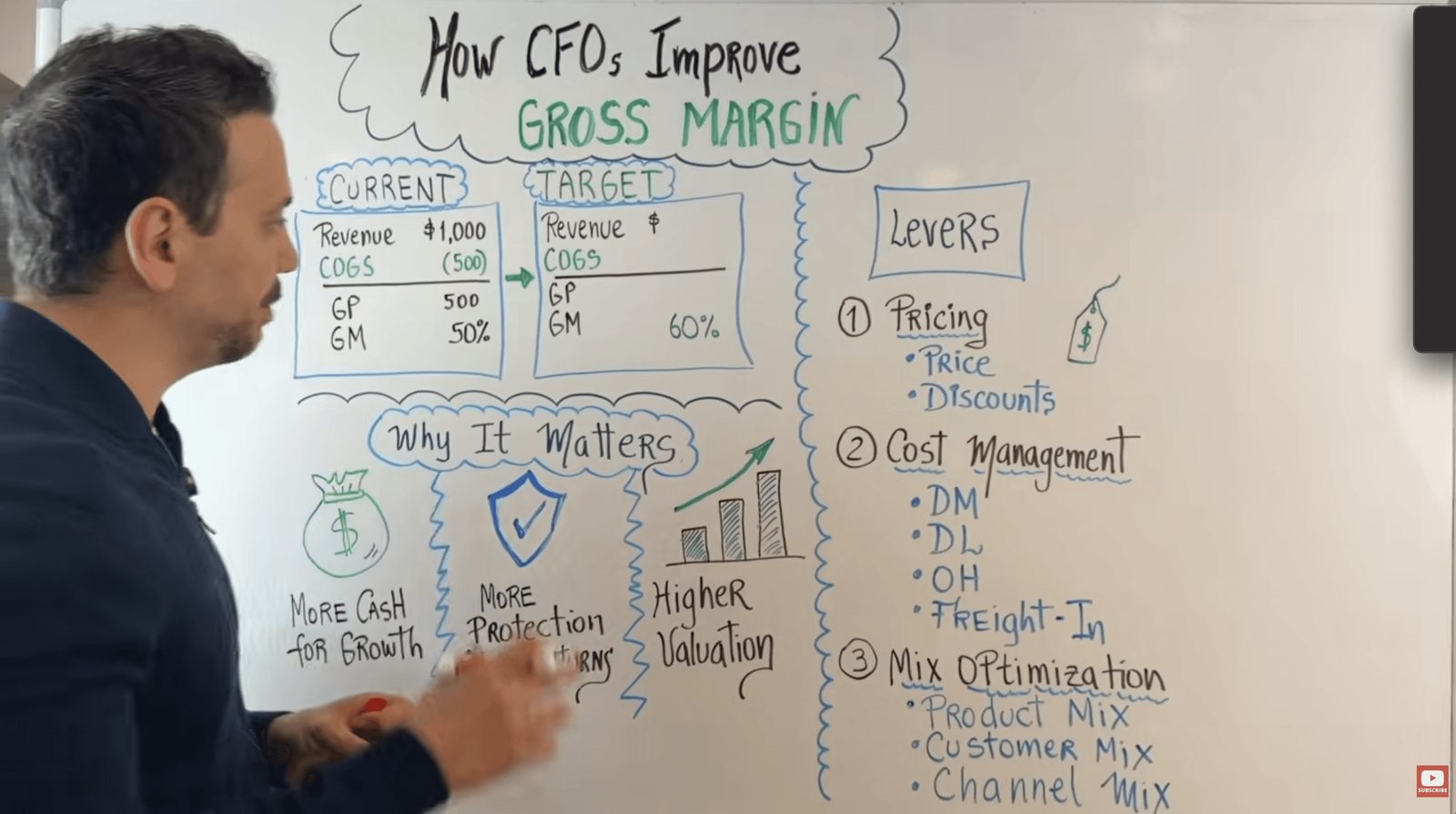
For a CPG company, a gross margin typically ranges from 25% to 70%, depending on various factors such as product type and market positioning. In our example, we will analyze a beverage company that currently has:
- Revenue: $1,000
- COGS: $500
- Gross Profit: $500
- Gross Margin: 50%
While a 50% gross margin is respectable, our target is to elevate it to 60%. Why is this important? Let’s explore the benefits of improving gross margin.
Why Improve Gross Margin?
Improving gross margin can lead to several significant advantages for a business:
- More Cash for Growth: Retaining more revenue allows for reinvestment in critical areas such as hiring, marketing, and operational improvements.
- Protection During Downturns: A higher gross margin provides a buffer during economic downturns, allowing companies to weather financial storms more effectively.
- Higher Valuation: Companies with higher gross margins are often valued more favorably during acquisitions, as they indicate better profitability and operational efficiency.
These factors underscore the importance of focusing on gross margin improvement as a strategic priority for CFOs.
Key Levers for Improving Gross Margin
To enhance gross margin, CFOs typically focus on two main elements: increasing revenue and reducing COGS. Let’s break down the strategies involved in each area.
1. Increasing Revenue
There are two primary levers for increasing revenue: pricing strategies and mix optimization.
Pricing Strategies
Pricing is a critical factor in determining revenue. Here are some strategies CFOs can employ:
- Regular Pricing Reviews: Periodically assess pricing against the competitive landscape to ensure that your product is priced appropriately.
- Incremental Price Increases: Consider small price increases, such as raising the price from $10 to $10.50, which can significantly boost revenue.
- Discount Management: While discounts can attract new customers, it’s essential to manage them carefully. Test different discount levels to find the optimal balance that maximizes revenue without eroding margins.
Mix Optimization
Mix optimization involves analyzing product, customer, and channel mixes to maximize revenue:
- Product Mix: Focus on high-margin products. For instance, if one beverage flavor has a higher margin, prioritize its promotion and sales efforts.
- Customer Mix: Evaluate customer relationships. If certain customers, like large retailers, are squeezing margins, consider shifting focus to more profitable customers.
- Channel Mix: Analyze sales channels. If selling on platforms like Amazon reduces margins due to fees, enhance your own website’s customer experience to drive direct sales.
2. Reducing COGS
Reducing COGS is equally important for improving gross margin. Here are the key components to consider:
Cost Management
Cost management involves scrutinizing various elements that contribute to COGS:
- Direct Material Costs: Review the ingredients and packaging used in your products. For example, simplifying packaging can lead to significant savings.
- Direct Labor and Overhead: If using a co-manufacturer, regularly seek quotes from multiple suppliers to ensure competitive pricing.
- Freight Costs: Optimize shipping by consolidating shipments or exploring direct-to-consumer shipping options to reduce costs.
Case Study: Beverage Company Example
Let’s apply these strategies to our beverage company example. Initially, the company has:
- Revenue: $1,000
- COGS: $500
- Gross Profit: $500
- Gross Margin: 50%
By implementing the following strategies, the company can improve its gross margin:
- Pricing Increase: Raise the price from $10 to $10.50, increasing revenue to $1,050.
- Cost Reduction: Reduce COGS from $500 to $400 through better material sourcing and labor management.
After these adjustments, the new financials would be:
- New Revenue: $1,050
- New COGS: $400
- New Gross Profit: $650
- New Gross Margin: 61.9%
This example illustrates how targeted strategies can lead to significant improvements in gross margin.
Conclusion
Improving gross margin is a multifaceted approach that requires careful analysis and strategic implementation. By focusing on pricing strategies, mix optimization, and cost management, CFOs can enhance profitability and position their companies for long-term success. Remember, a higher gross margin not only provides more cash for growth but also offers protection during economic downturns and leads to higher company valuations.
If you found this article helpful, consider joining the $Controller Academy/$ to deepen your financial expertise. Don’t forget to follow me on social media for more insights:
Thank you for reading, and I look forward to seeing you in the next post!