
Welcome to our in-depth tutorial on creating the Statement of Shareholder Equity! In this post, we will walk you through the essential steps to prepare this crucial financial statement, which is often overlooked but holds significant importance for investors and stakeholders. Whether you're a budding accountant, a business owner, or just someone interested in finance, this guide will provide you with the knowledge you need to understand and create the Statement of Shareholder Equity.
Understanding the Statement of Shareholder Equity
The Statement of Shareholder Equity is one of the four primary financial statements, alongside the balance sheet, income statement, and statement of cash flows. While it may not receive as much attention as its siblings, it plays a vital role in showcasing the changes in equity over a specific period. Think of it as the underdog of financial statements, often overshadowed but essential for a complete financial picture.
Why is the Statement of Shareholder Equity Important?
Investors and stakeholders care about the Statement of Shareholder Equity because it provides insights into:
- The changes in equity accounts over time
- How much ownership investors have in the company
- The impact of new funding rounds on existing shareholders
- Retained earnings and accumulated deficits
Understanding these elements can help investors make informed decisions about their investments.
When Do You Need a Statement of Shareholder Equity?
Typically, a Statement of Shareholder Equity is required when a company is large enough to undergo an audit. This means that if your business is growing and attracting investors, you will need to prepare this statement to provide transparency and accountability.
Preparing the Statement of Shareholder Equity
Now that we understand the importance of the Statement of Shareholder Equity, let’s dive into the step-by-step process of creating it. We will use the balance sheet as our primary source of information.
Step 1: Gather Necessary Documents
To create the Statement of Shareholder Equity, you will need:
- The balance sheet for the current year
- The balance sheet for the prior year
- The stock purchase ledger
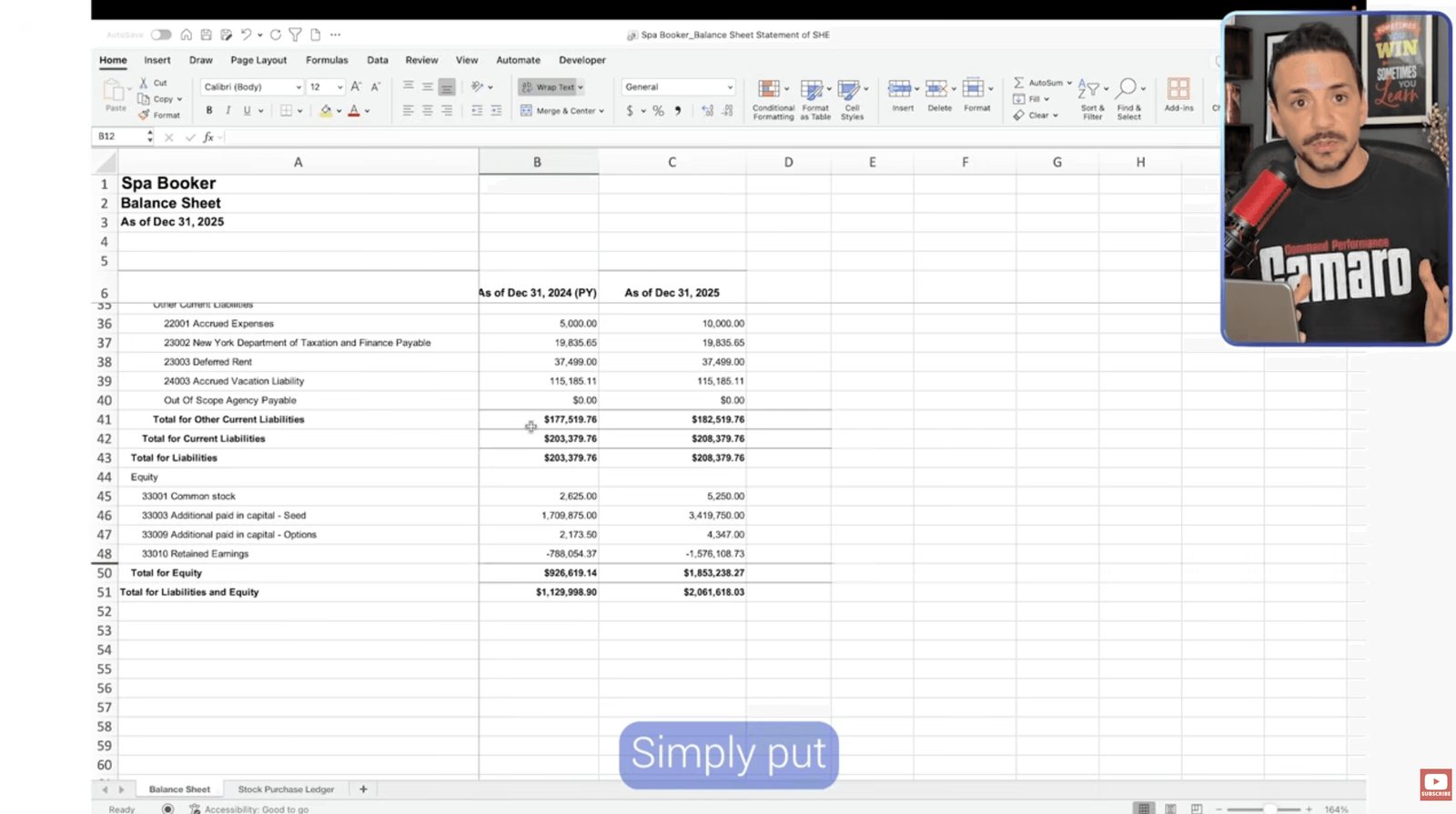
In our example, we will prepare the statement for the year ended December 31, 2025, using the balance sheets for 2025 and 2024.
Step 2: Create a Fluctuation Analysis
The first step in drafting the Statement of Shareholder Equity is to create a fluctuation analysis. This analysis will help you identify the changes in equity accounts from the previous year to the current year.
To create a fluctuation analysis:
- Subtract the prior year’s balance from the current year’s balance for each equity account.
- Format the results for clarity.
Highlight the changes in equity accounts, such as common stock, additional paid-in capital, and retained earnings.
Step 3: Draft the Statement of Shareholder Equity
Now that you have your fluctuation analysis, it’s time to draft the Statement of Shareholder Equity. Here’s how to do it:
- Create a new tab in your spreadsheet and label it "Statement of SHE."
- Input the company name and the date for the year ended December 31, 2025.
- Set up your column headers based on the balance sheet, including common stock, additional paid-in capital, option expense, and retained earnings.
Step 4: Input Beginning Balances
For each equity account, input the beginning balances from the prior year’s balance sheet. This will serve as the foundation for your statement.
Step 5: Layer in Activity for the Current Year
Next, you will need to account for any changes that occurred during the current year:
- Record any increases in common stock due to new funding.
- Calculate additional paid-in capital based on the difference between the purchase price and par value of shares issued.
- Include any changes in option expense and retained earnings.
Step 6: Calculate Totals
Once you have input all the necessary data, calculate the totals for each equity account. This will give you the ending balances for the year.
Step 7: Format the Statement
To make your Statement of Shareholder Equity visually appealing and easy to read, format it appropriately:
- Bold the title and headers.
- Use currency formatting for dollar amounts.
- Ensure that the layout is clean and organized.
How to Read the Statement of Shareholder Equity
As an investor, understanding how to read the Statement of Shareholder Equity is crucial. Here are some key points to consider:
- Look at the beginning and ending equity balances to assess growth.
- Analyze the changes in retained earnings to understand the company’s profitability.
- Consider the impact of new funding on existing shareholders, as this can lead to dilution.
In our example, we saw that the equity increased from $926,000 to $1.8 million, primarily due to additional funding. However, the retained earnings showed an accumulated deficit, indicating that the company is still relying on outside funding.
Download Your Free Template
To help you get started, we’ve created a free template for the Statement of Shareholder Equity. You can download it $here/$ and use it as a guide for your own financial statements.
Join the Controller Academy
If you’re looking to deepen your understanding of financial management and controllership, consider enrolling in the $Controller Academy/$. Join over 10,000 professionals who have benefited from this comprehensive program and earn a CPE certification in the process!
Conclusion
Creating the Statement of Shareholder Equity may seem daunting at first, but with the right approach and understanding, it can be a straightforward process. By following the steps outlined in this guide, you can prepare a clear and informative statement that will provide valuable insights to investors and stakeholders alike.
If you found this post helpful, please give it a thumbs up, share it with someone who might benefit, and stay tuned for more financial insights!